Embracing the Inner Voices
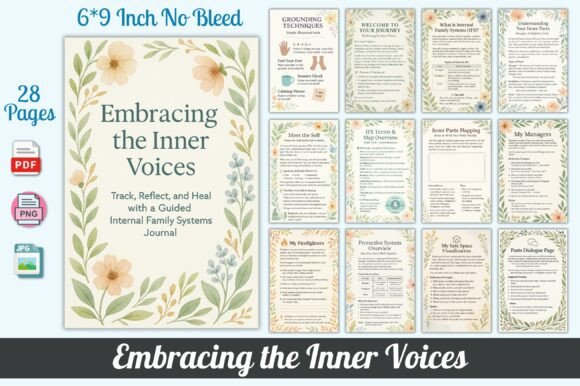
If you’ve ever felt pulled in different directions—like part of you wants to speak up while another part stays silent, or one voice urges action while another whispers fear—you’re not broken. You’re human. Embracing the Inner Voices is a gentle, grounded invitation to meet those parts with curiosity instead of judgment. It’s not a quick fix or a rigid self-help system. It’s a printable 6×9 journal rooted in Internal Family Systems (IFS), a well-researched, compassionate model used by therapists and healing practitioners worldwide.
What This Journal Actually Does—Without Overpromising
This isn’t just another blank notebook with pretty prompts. Embracing the Inner Voices offers structure where it helps—and space where it doesn’t. Each page serves a purpose: naming the quiet protector who keeps you “on task,” listening to the exiled part that holds old hurt, or reconnecting with your calm, centered Self. The layout guides without dictating. Visual mapping pages help you sketch relationships between inner parts. Simple diagrams clarify how Managers try to keep things under control, how Firefighters distract during overwhelm, and why Exiles carry unmet needs from the past—all without requiring prior therapy knowledge.
Who Finds Real Value in This Work?
You don’t need a clinical diagnosis—or even a formal therapy background—to benefit. A freelance designer overwhelmed by perfectionism might use the “Manager dialogue” pages to soften their inner critic before starting a new project. A teacher recovering from burnout could turn to the grounding tools after a tough day, then reflect using the weekly nervous system check-in. Someone exploring inner child work might write a letter to a younger part using the guided prompts—no therapist present, just honesty and care.
Therapists appreciate how cleanly it translates IFS concepts into client-friendly language. Entrepreneurs use it alongside business planning—not as a replacement for strategy, but as a way to notice when fear-based parts hijack decision-making. Bloggers and educators integrate excerpts into workshops on emotional resilience. Even small business owners building wellness offerings find it adaptable: printed copies become thoughtful client resources; digital versions support asynchronous coaching packages.
How It Fits Into Real Life—Not Just Idealized Routines
You don’t need an hour of quiet solitude to begin. Many users start with just five minutes: a body scan prompt before opening email, a single line in the “Parts Noticing Log” during lunch, or tracing a grounding exercise while waiting for coffee to brew. The journal’s 6×9 size makes it easy to tuck into a bag or leave open on a desk. Because it’s printable, you can print only the pages you need—skip ahead to reparenting exercises if that’s where you’re ready, or revisit the Self-compassion letters whenever something feels tender.
It works alongside other tools, too. Pair it with breathwork apps, therapy sessions, creative practice, or even mindful walking. One writer uses the “Safe Space Visualization” page before drafting difficult scenes; another educator prints extra copies for students in a social-emotional learning elective. No pressure to “do it all.” Just presence, pacing, and permission.
What Makes This Different From Other Journals?
- IFS-specific design: Unlike generic reflection journals, every prompt and layout reflects how parts actually interact—not as metaphors, but as lived experience.
- Somatic awareness built in: Body check-ins aren’t an afterthought—they’re woven into emotional processing, honoring how feelings live in the nervous system.
- No forced positivity: There’s no “gratitude list” requirement or pressure to reframe pain. Instead, there’s space to say, “This part is scared—and that makes sense.”
- Clarity over complexity: Concepts like “Self-leadership” or “unblending” are explained in plain language, with examples that feel relevant—not academic.
Things to Keep in Mind Before You Begin
This journal supports healing—but it’s not a substitute for professional care when trauma, severe anxiety, or dissociation is present. If strong emotions surface, trust your pace. You can pause, return to grounding pages, or reach out to a trained IFS therapist. Also, remember: progress isn’t linear. Some days you’ll map three parts. Other days, simply noticing tension in your shoulders—and writing one sentence about it—is enough.
The journal assumes no expertise, but it does ask for kindness toward yourself. That means skipping pages that don’t resonate, rewriting prompts in your own words, or using colored pencils instead of ink if that feels safer. There’s no “right” way to fill it—only what helps you feel more connected, less fragmented, and more like *you*.
Small Shifts, Lasting Grounding
Over time, users often notice subtle shifts: less self-criticism during setbacks, quicker recovery from stress, or a quieter internal noise floor. One freelancer shared how using the “Parts Dialogue” page helped her recognize her “urgency firefighter” before it derailed a deadline—leading to better boundaries and calmer communication. Another parent found the reparenting exercises softened years of harsh self-talk around motherhood.
None of this happens overnight. But with consistent, low-pressure engagement, Embracing the Inner Voices becomes more than a workbook—it becomes a companion for returning home to yourself, again and again.