Exploring Symmetry Through Creative Learning: The Role of the Symmetry Activity Book for Kids
Symmetry is more than just a visual concept—it’s a foundational element in mathematics, art, and science. For young learners, understanding symmetry can be both an engaging and educational experience. The Symmetry Activity Book for Kids is designed to introduce children to this essential concept in a fun and interactive way. This unique resource combines educational value with creative play, making it an ideal tool for preschoolers and kindergarten-aged children.
The Educational Value of Symmetry in Early Childhood Development
Symmetry plays a critical role in early childhood development, particularly in areas such as spatial awareness, pattern recognition, and problem-solving. By working with the Symmetry Activity Book for Kids, children are not only learning about shapes and forms but also developing key cognitive skills that support future academic success.
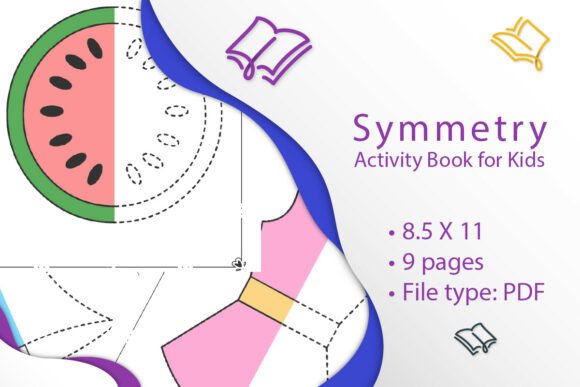
The book’s worksheets feature half of a colorful object or animal, challenging children to trace and color the missing half. This process encourages them to think critically about how parts of an image relate to one another. It also enhances their fine motor coordination, as they practice tracing lines and filling in spaces with precision.
Moreover, the act of completing symmetrical images helps improve attention to detail. Children must carefully observe the patterns and structures on one side of the page to replicate them accurately on the other. This kind of focused engagement supports visual perception, which is crucial for reading, writing, and other academic tasks.
How the Symmetry Activity Book for Kids Supports STEM Learning
While often associated with arts and crafts, symmetry has strong ties to science, technology, engineering, and math (STEM). The Symmetry Activity Book for Kids introduces these concepts in a playful manner, helping children grasp abstract ideas through hands-on activities.
For example, when a child completes a symmetrical drawing of a butterfly, they are essentially applying principles of geometry and reflection. These early experiences lay the groundwork for more advanced mathematical thinking later on. Similarly, exploring the symmetry of natural objects like leaves or flowers can spark curiosity about biology and environmental science.
The book’s design also supports logical reasoning and spatial thinking—skills that are fundamental to engineering and computer science. By manipulating shapes and patterns, children develop an intuitive understanding of how objects fit together in space, which is a valuable asset in technical fields.
Practical Applications of the Symmetry Activity Book for Kids
The versatility of the Symmetry Activity Book for Kids makes it suitable for a wide range of settings, from home environments to classroom instruction. Whether used as a supplement to formal education or as a standalone activity, this resource offers numerous benefits that cater to different learning styles and developmental needs.
In a home setting, parents can use the book to engage their children in meaningful learning experiences. The activity sheets are easy to incorporate into daily routines, whether during free play, quiet time, or structured learning sessions. The simplicity of the format allows for flexibility, enabling children to work at their own pace and explore creativity without pressure.
In a classroom environment, teachers can integrate the Symmetry Activity Book for Kids into lesson plans to reinforce concepts taught in math and art classes. The book’s interactive nature makes it an excellent tool for group activities, where students can collaborate and discuss their observations. This social interaction fosters communication skills and deepens understanding through shared discovery.
Additionally, the book can be used in special education settings to support children with diverse learning needs. Its visual and tactile elements make it accessible to children with varying abilities, promoting inclusivity and equal opportunities for growth.
Key Features That Make the Symmetry Activity Book for Kids Stand Out
What sets the Symmetry Activity Book for Kids apart from other educational resources is its thoughtful design and comprehensive approach to learning. Here are some of the standout features that contribute to its effectiveness:
- High-resolution PDF format: The book is available in a digital format that ensures clarity and ease of use across devices. This makes it convenient for both educators and parents to access and print as needed.
- 8 pages of engaging content: Each page presents a new challenge, keeping children motivated and interested throughout the activity. The variety of images, from animals to everyday objects, ensures that there is always something new to explore.
- Focus on multiple skills: In addition to teaching symmetry, the book helps develop fine motor skills, hand-eye coordination, and visual discrimination. These combined benefits make it a well-rounded educational tool.
- User-friendly instructions: The simple, step-by-step format allows children to follow along easily, reducing frustration and encouraging independent learning.
- Size 8.5 x 11 inches: The standard size makes it easy to handle and store, ensuring that the book remains accessible for regular use.
Enhancing Creativity and Engagement Through Symmetry Activities
One of the most significant advantages of the Symmetry Activity Book for Kids is its ability to foster creativity while reinforcing educational concepts. Unlike traditional worksheets that focus solely on repetition, this resource encourages children to think beyond the lines and explore their artistic potential.
By completing the symmetrical halves of images, children are given the freedom to express themselves through color choices and stylistic interpretations. This creative aspect not only makes the activity more enjoyable but also helps build confidence and self-expression. It allows children to see themselves as active participants in the learning process rather than passive recipients of information.
Furthermore, the book promotes a sense of accomplishment as children complete each worksheet. This positive reinforcement can be especially beneficial for young learners who may struggle with traditional academic tasks. The satisfaction of seeing their completed artwork can motivate them to continue exploring new challenges and learning opportunities.
Considerations for Using the Symmetry Activity Book for Kids
While the Symmetry Activity Book for Kids is an excellent resource, it’s important to consider how it fits into a broader educational framework. Here are some considerations to keep in mind when using this tool:
First, it’s essential to balance structured activities with unstructured play. While the book provides a clear learning objective, allowing children time to explore and experiment independently can lead to deeper understanding and greater engagement.
Second, the book should be used as part of a holistic approach to early childhood education. Symmetry is just one of many important concepts that contribute to a child’s development. Integrating it with other subjects, such as language arts, music, and physical education, can create a more well-rounded learning experience.
Finally, it’s important to monitor a child’s progress and adjust the difficulty level as needed. As children grow and develop, their ability to recognize and apply symmetry concepts will evolve. Providing age-appropriate challenges ensures that they remain engaged and challenged throughout their learning journey.
Conclusion
The Symmetry Activity Book for Kids is more than just a collection of worksheets—it’s a gateway to a world of discovery and creativity. By introducing children to the concept of symmetry in a fun and interactive way, this resource supports the development of essential skills that will benefit them throughout their lives.
Whether used at home or in the classroom, the book offers a valuable tool for educators and parents alike. Its combination of educational value, creative expression, and practical application makes it an ideal choice for fostering a love of learning in young children.