Pastel Rose KDP Interior: A Thoughtful Choice for Calm, Feminine Journaling Projects
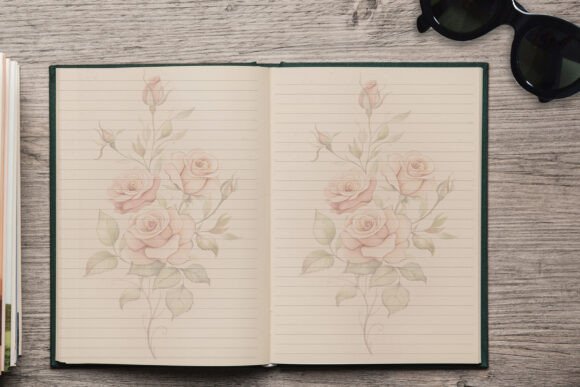
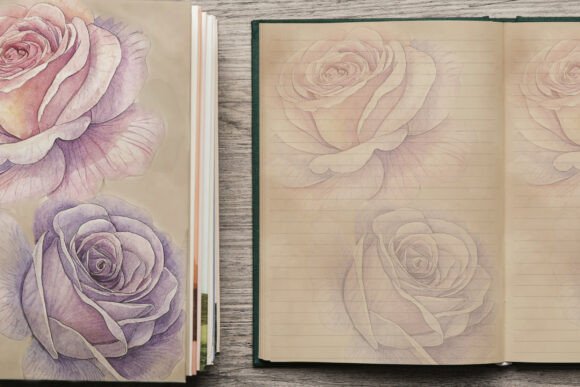
The Pastel Rose KDP Interior is a professionally formatted, print-ready interior template designed specifically for Amazon KDP publishing—centered on quiet elegance and intentional use. It’s not just another lined notebook layout. At its core, it offers 120 lined pages in the widely adopted 6 x 9 inch trim size with full bleed, meaning background elements extend to the edge of the printed page without unsightly white borders. What sets it apart is its consistent visual language: two hand-drawn rose motifs per page, rendered in soft, low-saturation pastel tones—think muted blush, lavender mist, and pale sage—never competing with handwriting, always supporting mood.
How It Fits Into Real-World Self-Publishing Workflows
For creators building gratitude journals, reflective workbooks, or gentle habit trackers, interior design affects usability more than many realize. A busy pattern can distract from writing; overly stark layouts may feel clinical. The Pastel Rose KDP Interior occupies a deliberate middle ground: decorative enough to signal warmth and care, minimal enough to keep attention on content. Each page includes standard top-and-bottom margins, generous line spacing (optimized for readability and varied handwriting styles), and bleed-safe placement of floral elements—so roses remain intact even after KDP’s automated trimming.
This isn’t a DIY Canva template or a generic PDF download. It’s built to KDP’s exact technical specifications: CMYK color mode, 300 DPI resolution, embedded fonts (where applicable), and proper bleed and safety zones. That means fewer upload rejections, less time troubleshooting file warnings, and no last-minute cropping surprises when proofs arrive.
Comparing Design Intent With Other Interior Approaches
Many KDP interiors fall into one of three broad categories: functional minimalism (clean lines, zero decoration), high-contrast thematic design (bold florals, geometric patterns), or fully customizable modular kits (with separate headers, dividers, and trackers). The Pastel Rose KDP Interior sits firmly in the first category—but with subtle aesthetic intentionality.
Compared to minimalist interiors that use only serif or sans-serif type-based headers, this version adds tactile, organic texture through illustration—yet avoids the density of full-page watercolor spreads or overlapping botanical layers. Unlike themed interiors built around holidays or seasons, its palette and motif are evergreen: appropriate for year-round use, not tied to a specific moment or trend. And unlike modular kits requiring assembly in InDesign or Affinity Publisher, it arrives as a single, ready-to-upload PDF—ideal for authors prioritizing speed and consistency over granular customization.
When This Interior Supports Your Goals—and When It Might Not
The Pastel Rose KDP Interior shines in contexts where tone and emotional resonance matter as much as structure. Consider a gratitude journal titled *Soft Light, Steady Steps*: the gentle roses reinforce the title’s promise without needing explanation. Or a guided reflection workbook for burnout recovery—the subdued palette supports calm rather than stimulation. Users consistently report that the repetition of the same two rose placements across pages creates a quiet rhythm, almost like visual breathing room between entries.
That said, it’s not universally optimal. If your project requires dated entries with calendar grids, weekly spreads, checkboxes, or progress bars, this interior doesn’t include those components—it’s strictly lined pages with decorative accents. Similarly, if your audience prefers high-contrast text for accessibility (e.g., dyslexic readers or older adults), the light pastel tones—while beautiful—won’t enhance legibility. You’d need to layer in stronger typography or consider an alternate interior with bolder line weights or darker accent colors.
It also assumes a certain aesthetic alignment. A business-planning workbook focused on metrics and quarterly goals would likely feel tonally mismatched with soft roses—even if technically functional. Here, fit isn’t about capability alone; it’s about whether the visual language reinforces, rather than undermines, your book’s purpose.
Practical Tradeoffs: Simplicity vs. Flexibility
One strength of the Pastel Rose KDP Interior is its predictability. Because every page follows the same layout—same margin sizes, same rose positions, same line count—you avoid inconsistencies that can arise when mixing templates or adjusting spacing manually. That uniformity helps maintain flow during reading and contributes to perceived professionalism in the final printed book.
The tradeoff is flexibility. You can’t easily swap out the roses for daisies, shift their position to accommodate a quote box, or add section dividers mid-document without editing the source file (which requires design software and familiarity with layered PDFs). If your workflow depends on frequent iteration—say, testing multiple cover + interior pairings with different audiences—this interior works best as a stable foundation, not a dynamic canvas.
Also worth noting: while the 6 x 9 size with bleed suits most general journaling uses, it’s less ideal for pocket-sized portability or large-format creative exercises (like sketch-journal hybrids). If you’re designing something meant to be held open on a lap or used alongside art supplies, you may want to explore 5 x 8 or 8.5 x 11 variants—or confirm bleed compatibility with your chosen printer beyond KDP.
Realistic Use Cases and Compatibility Notes
Creators using the Pastel Rose KDP Interior often pair it with complementary cover designs—matte finishes, soft-touch laminates, or spot UV accents that echo the interior’s delicacy. It’s equally effective for digital-only planners (when exported as printable PDFs) and physical books, since the resolution and layout hold up across both formats.
From a production standpoint, it integrates smoothly with common tools. Authors using Atticus or Kindle Create can import the PDF as a fixed-layout interior. Those working in Adobe InDesign can use it as a master page reference or export layers for further refinement. And because it’s delivered as a standalone file—not a subscription service or cloud-based editor—it remains under your full control, with no platform lock-in.
That ownership matters. Some alternatives rely on browser-based editors where exports may vary by device or update unexpectedly. With the Pastel Rose KDP Interior, what you download is what you upload—no hidden dependencies, no login requirements, no usage limits.
Making the Call: Is This the Right Interior for Your Next Project?
Ask yourself three questions:
- Does the emotional tone of your book align with softness, gentleness, and quiet intentionality? If yes, the roses support that message. If your voice is bold, analytical, or urgent, a different visual language may serve you better.
- Do you need functionality beyond lined pages—like trackers, prompts, or dated layouts? If so, this interior will require supplemental design work or pairing with another resource.
- Is consistency and KDP compliance a priority over maximum customization? If you value reliability, speed-to-publish, and predictable output, this interior reduces friction. If you thrive on iterative design and enjoy fine-tuning every element, you may prefer starting from scratch or using a modular system.
There’s no universal “best” KDP interior—only the one that fits your goals, audience, and capacity. The Pastel Rose KDP Interior excels where atmosphere, accessibility, and technical readiness converge. It won’t solve every design challenge, but for thoughtful journaling projects rooted in presence and care, it provides a grounded, elegant foundation—one rose at a time.